
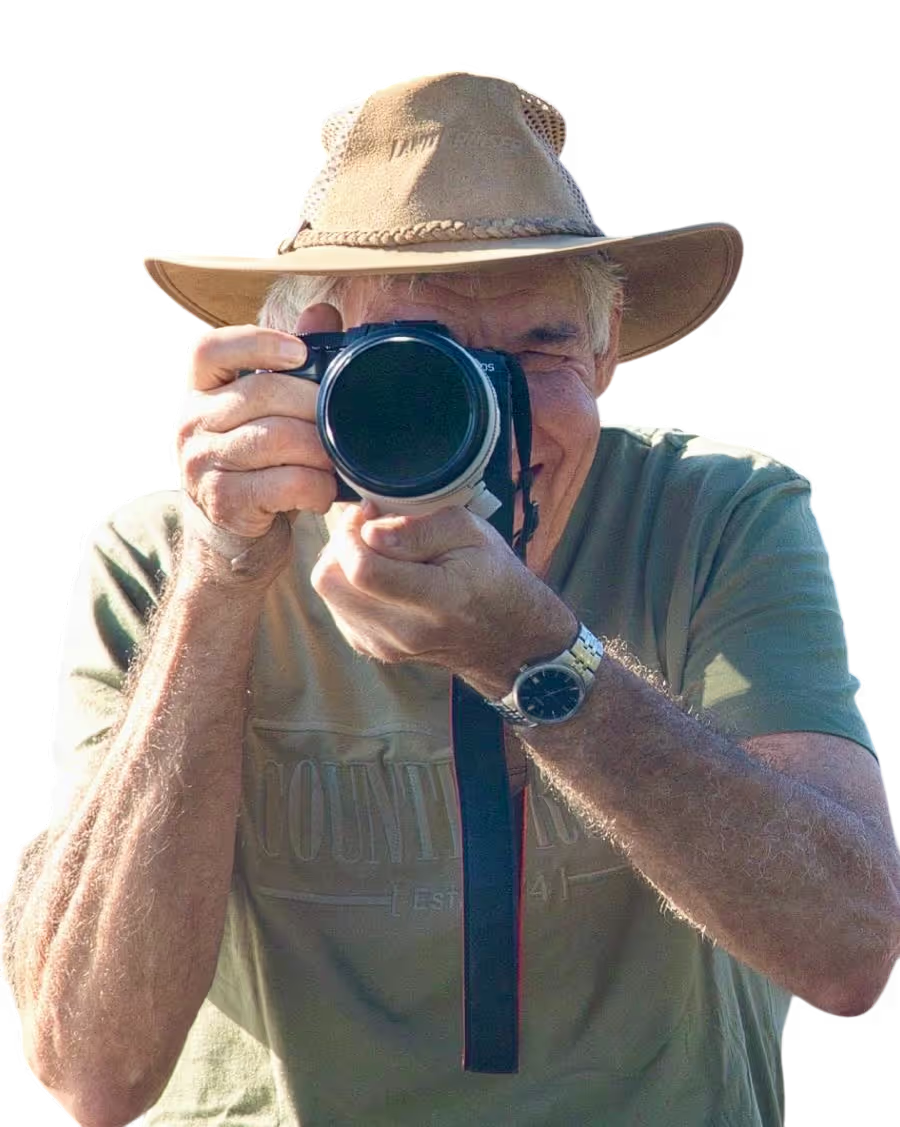

the place we live
There is a peculiarity about the human race
Like a newborn calf, we crawl out of the membranes, look at the bright sun and the green grass, sniff the air and look for the udder. We are programmed to desire and find the udder. We then observe, investigate, familiarise and then settle for a paradigm of our own making. I suppose the Great Creator planned it to be like this, so that we can survive and thrive in our reality.
Does it lead to confidence? Yes.
Maybe even over-confidence!
Is it restrictive? Severely so.
Does it guide us closer to the Truth? No.
Well, it does help us to deal with the reality of today, but it doesn’t do much to open our eyes and our minds to the greater horizons of our existence or the domain of God.
For example, have you ever heard of an entomologist who is scared of spiders? No, because that is what he deals with every day, and insects and spiders are his passion.
Are we scared of spiders? Absolutely!
Why the difference? Our frame of reference does not include a familiarity with spiders. In fact, it probably excludes spiders and, as a result, some of us even have a phobia of spiders.
And so it goes for all aspects of life.
Can you see how minimal our experience is and how it restricts our views of life, our frame of reference and our value systems? Can you see how much we don’t see, can’t observe and consequently exclude from our minds?
Yet, our confidence typically leaves us judgmental.
So, I know you are neither a pilot nor a scuba diver!
But come, get into my flying machine, strap in and don’t worry.
I want to show you around “the place we live”.
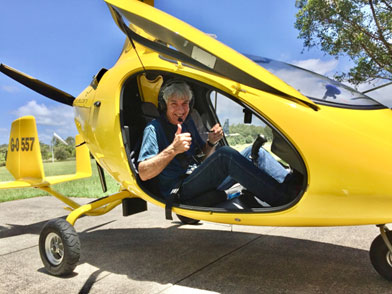
Come Fly with me!
I’ll be you tour guide
I curl my thumb around the joystick, push the pre-rotator button, and ease the throttle forward. Initially, nothing happens, but then the rotor blade stirs above, and as if waking from a deep sleep, it sluggishly starts pushing its way around the orbit. I keep my thumb firmly down, hold the stick hard forward, and increase the engine revs. The rotor blade dial creeps up, and the noise pitch climbs from a low rumble to a high-pitched crescendo.
The dial hits 200rpm.
I remove my thumb from the pre-rotator button, pull the joystick back, release the handbrake and open the throttle.
The gyrocopter starts rolling upwind.
I pick runway 06 since the unusual northerly wind flops an 8-knot breeze into the windsock, lifting the sock unwillingly down the grass runway towards my nose. The gyro is picking up more speed over the bumpy grass, and I carefully balance her with my feet on the rudder and hand on the stick. Three magpies waddling over the grass take to the air, banking sharply out of the way of the approaching flying machine. Two magpie larks on the right squat down for the approaching windstorm. What is it with these birds and wind? Despite their flimsy frames, they often perch a tiny fuselage on a swaying twig and then hold on for dear life, feathers swirling in the wind. Nearly as if they enjoy fighting turbulent air.
And then the plane steps onto air.
The propeller pushing at the back, forces the invisible gale through the rotor blades on top of the tower and sends the gyrocopter into a steep climb. I bank at 500 feet, climb to 1000 feet, and pull the throttle back to enjoy a gentle cruise at 65 knots. The plane drifts on the smooth morning air held aloft by the woof-woof of the passive rotor blades above. The ceiling of fluffy clouds touches the blades.
And you and I become clumsy but honoured visitors to the surreal domain of the birds!
We look through the domed windows of the plane at the flat earth below. Cars are crawling up and down the grey strips of bitumen. Little square figures with swinging arms walk on the sidewalks, get in and out of cars, disappear into buildings or run around in sports gear on the green oval. The trees that used to have trunks to hold their branches and leaves off the ground are now flat, green blotches of foliage scattered over the earth. Humans and cars and trees and houses all seem to be tied to the surface of the planet by an inescapable force, because none of them are up here where we are. Yet, they all seem blissfully unaware of the severe restraints of their world, busying themselves with all the things their flat world has on offer.
Look there! The blue light on top of that car is flashing! We look on as the police car accelerates fast and seems to push a little red car off the road. They both come to a standstill next to the strip of bitumen, the blue light still flashing.
The dial on my dashboard reads 65 knots. We both smile in satisfaction. No such dangers up here!
Above our heads is a roof window in the fuselage of the Cavelon. The rotor blade clips streams of sunlight from between the clouds into short strips of light, spilling them into the cockpit like pleasant flashes of the mind.
From this place, the birds keep a careful eye on the little human squares below, some trailing the disturbing fluff of a dog behind them. They watch the shadows of trees shrink and stretch and follow the waters of a stream gliding over rocks. And, while they observe, they float, soar, and dive in this space, as familiar to it as the solid surface of the planet below is to the magnetised creatures attached to it.
And our reality?
Sorry, my friend, our fuel is running low. We’ll have to return to the aerodrome. And then, after announcing our intentions over the radio, checking the plane and the air traffic around us, we approach at 35 degrees and land back safely on runway 06.
I place a handful of sunflower seeds on the wooden table, look up and whistle. The King Parrot leans forward to get a better view. He then drops off headfirst from the twig he was perching on some 25 feet above the ground. His angle of approach is near vertical. His wings slightly ajar to stop him from tilting sideways. He becomes a blur of speed to the eye. But just before he hits the table, he lifts his head, flicks his wings open while paddling back quickly, flares his tail feathers down and forward and touches down gently on the table next to the seeds.
A brilliant landing!
As if nothing has happened, he tilts his head sideways to look me in the eye with his own glassy eye, mumbles a good morning and starts munching.
A few minutes later, Mrs King Parrot lands on the same twig. The King tilts his head, glances upwards with his right eye and pauses for a short moment in thought. He then steps into the air, his open wings working downwards and backwards, his tail feathers steering for a steep climb.
The bird soars up into the tree at 80 degrees from a standstill!
He misses branches and leaves and, at the correct height, fine-tunes his angle and speed to lightly land on a branch close to his lady. He glances sideways at her beauty, holds his proud head high, and she drops hers in submission.
But when little critters get really small, we struggle even more to appreciate their world.
Jacques instructs me to lie on my belly, look into the pond and tell him what I see.
"I see water, lilies, algae and a frog" I reply confidently. Jacques is a budding entomologist at the university and very clever. I am just ten.
He produces a magnifying glass out of his pocket and hands it to me. "Look again", Jacques instructs.
It is quiet for a long time, and the more I look, the more I see. Tiny creatures are walking on the water's surface, the meniscus denting under their feet like they are walking on grandma's feather bed. Then a water scooter comes past, legs a whirl as he churns the water in a swirl. I look through the surface into the deep. A fish the size of a pencil point teases a tadpole with two tiny legs protruding next to his translucent tail. A larva of some kind buries into the mud when my shadow moves closer.
And then I hear a whirring sound.
I look up into the bulging compound eyes of a dragonfly hovering over the water three feet away. This is (to my mind) the most sophisticated flying machine on the planet! The dragonfly inspects me, the intruder, carefully in full colour through 30,000 optical units as part of his comprehensive 360-degree surveillance program. His four wings vibrate at 30 to 40 cycles per second and incline to neutralise the effect of the light breeze, perching himself dead still on the moving air. In the corner of my eye, I spot a second dragonfly landing on a reed at the water's edge. My inspector carefully reverses 3 inches to better keep both of us under surveillance. The next moment, he banks and departs sideways in the blink of an eye, meeting up with his mistress, who sees him coming in mid-air. Then follows a blistering chase at 50 km per hour backwards and forward over the pond. His lady, trying to outsmart his tracking, diverts at sharp angles right and left, up and down, but manages to stay only a few centimetres ahead. Nothing she offers can beat his hot pursuit.
As if arranged by signal, they both touch down simultaneously and with precision a wing width apart on the landing pad of a water lily leaf. She rolls her blue composite eyes, and he stares into hers with 30,000 expressions of love.
Such is the success of courtship, 300 million years in the making of one of the most advanced aeronauts on the planet.
Eagles and vultures venture high up near the clouds in a world that must be close to heaven. These glide masters get there by reading the winds and using the thermal updrafts. Often, without a single beat of a wing, they will reach their 6,000 to 10,000 feet target, level off, and inspect the globe far below. And if they need the thin air for low resistance and long-distance travel, some vultures might climb to more than 30,000 feet, temperatures of minus 50 degrees and oxygen levels so low that man would survive with an oxygen mask only. So let us rather descend to 10,000 feet again!
This is the quiet space of experts in sailing the winds. While running the airship on autopilot, they have plenty of time to survey. Both vultures and eagles have powerful eyesight, far surpassing those of humans. They can also see in a broader range of colours, perceive better depth, and have an acute sense of movement detection. They scan the earth's surface for prey and carrion while watching the behaviour of the other aeronauts around them carefully. If one spots an area of interest, he will start circling, drawing the interest of others. The vulture team will gather in a wide circle to inspect what is happening below. When all looks favourable, the circle will break into a spiral descent ending in the slow motion landings of Hercules-like freight planes around the carrion.
But eagles rather hunt in pairs. When prey is detected, they will dive out of the sky at speeds exceeding 160 kilometres per hour, and in the case of the Peregrine falcon, up to 386 kilometres per hour! The impact and subsequent battle on the ground are often as spectacular as the near-vertical dive preceding it.
And then, flying could just be for sheer joy!
Just look at a flock of Galahs as the sun skims the horizon in the Outback. They turn and tumble, swerve and swing and mock the slow-moving earthlings below in grey and pink display.
A pair of Fish Eagles would soar the skies to play one another in courtship on the wind. They would tease each other, dive, and lock their talons in spectacular cartwheel acrobatics, tumbling through the air only to break up dangerously close to the ground. Tired of play, the two would then glide high over their territory, announcing their reign with vociferous calls (Icthyophaga vocifer) dominating the African skies for kilometres on end and filling the earthlings with awe.
With the sun at our back, we break the silver ceiling.
The blue yonder stretches all around as far as the eye can see.
We are adrift in space, weightless and wingless.
The earth far below has lost its grip.
Finally, we are free!
No screeching engines, no whirling rotor blades and, no wings!
Our bodies turn around like tossed dolls to look at the cloud-beaten ceiling above, the light shimmering in shades of white, silver, blue, and green. But where are the birds?
There ought to be birds in the skies!
And then we see it!
A loggerhead turtle glides big-eyed towards us, curious about the new visitors to his world. He has no wings, but the gentle movement of his flat flippers rows and steers him gracefully through the water. He pauses close by. His big, innocent eye curiously inspects ours.
We slowly drift further down towards the ocean floor. The white sands stretch in long strips between the coral bommies and rocky outcrops. It would be nice to land on the white sand and stroll towards the rocks, but we are weightless and instead float in slow motion over the surface carried by the current.
A dolphin appears in the distant haze to the right. The next moment, we are surrounded by a hundred curious members of the local pod. They turn their heads to look with large, lazy grey eyes. And then their fixed, wry smiles seem to convince them to play with us long-legged clumsy creatures. One chases the other and nudges gently when he catches up. Another picks up a piece of seaweed from the sand and tosses it towards us. Dolphins, like whales, were once terrestrial mammals that later moved back to the sea. Unlike sea turtles that kept their entire skeleton and converted front and hind legs into plain sailing flippers, the bones of the lower limbs in dolphins disappeared. Modified fibrous connective tissue took up the new fin action for propulsion required of the tail fluke. Only small vestigial elements of the pelvic bones remained in some dolphins and whales. So, the remarkably adapted animals circle us, with potent yet somewhat clumsy tail action from the "hip hump" down, in vertical strides. The skeletons of the front legs were preserved and packed (like that of the loggerhead turtle) into well-designed pectoral flippers to enable bank, brake, turn and glide in the agile creatures. As we watch, the pod flicks their tails, tilt, and twist their ailerons to head for the silver ceiling above. The next moment, they all breach the surface, inhale deeply, dive down, and dissolve in the distance.
Dolphins typically can hold their breath for 8-10 minutes, while sperm whales are known to hold their breath for up to 90 minutes. You and I can only go well past two minutes if we cheat using scuba equipment, as we are!
The current carries us towards the coral reef. As we get closer, the blue-green veil makes way for some of the most vivid colours on the planet. The brilliant hues of coral polyps, sponges, and algae in shades of red, orange, pink, and purple display the abundance of biodiversity in this underwater ecosystem. And then, instead of the acrobats of the skies, the colour-splashed Lorikeets and King Parrots, the jets of the insect world or the masters of adaptation that sail the underwaters, come the reef's local aviators. The reef and deep-sea fishes were initially designed for and born into the aquatic sphere. Their tails generate propulsion with horizontal action; the lateral line system provides balance and orientation, while the pectoral fins generate steer, bank, and hover. Various other fins are used to assist in advanced aviation, including the dorsal, caudal, and pelvic fins.
First, a green, blue, and pink parrotfish comes to investigate. This doer of earthworks is not the most agile inhabitant of the reef. He moves slowly, grunts, pops, and chirps, and generally slowly floats around, asserting his passive authority. As he looks at us somewhat coercively, he spits out the undesired chew of coral, rock and algae that slowly drift downward in the current.
Behind him, an Angel Fish in smart yellow, cream, and black attire pauses, lifts the long-curved spear in her dorsal fin even higher, and flicks from side to side to observe the encounter with the foreigners better. A Surgeonfish in deep blue and yellow finish emerges curiously out of a cave but chooses to hang around the entrance for safety.
The graceful and elegant Zebra Lionfish stirs on the rocky ledge outside the cave. His plumes and feathers waving in the current around his striped fuselage. But these frills are not of much benefit in aviation. The small predator then spreads his fins to appear bigger and, in the process, displays his poisonous spines.
We carefully steer away.
Then, a platoon of Yellowtail Kingfish appears out of the blue. The two-meter-long predators cruise in formation over the reef, sending a rainbow of little fish scattering for shelter. These streamlined jets can reach more than 60 kilometres per hour with a few tail flicks. They circle around a bommie, spot us and approach curiously for an inspection. We can nearly touch the slimline giants as they glide gracefully through the waters around us in two laps. And then, with a few flicks of their elegant bodies flashing in the sunlight, they disappear again in the blue yonder.
The Maker of this place is not only a master engineer but indeed also an artist par excellence.
We have been cruising the world of water for just over 30 minutes, and our air is getting low in the cylinders. This flight is also coming to an end. We paddle back to the silver ceiling and break the surface. The yellow sun and white clouds are painted on the blue canvas above. A seagull screeches loudly and dives down to get a closer look at the strange visitors from the sea.
With a few strokes of wing, he lands on the water close by, pokes his yellow webbed paddles through the surface to tread the liquid “air” he floats on. So, the seagull and ourselves drift around on the interface between the skies and the oceans, each with their skilled auronauts, their acrobats and their sailors that excel.
Only, we are earthbound by nature.
And this is where we get to the painful confession of your tour guide.
I never took any passenger on a tour in my gyrocopter.
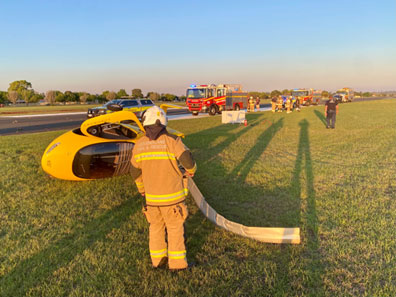
In fact, when gravity laid its
claim, my gyrocopter and I
fell out of the sky.
By grace alone, I was the
one taking the photo.
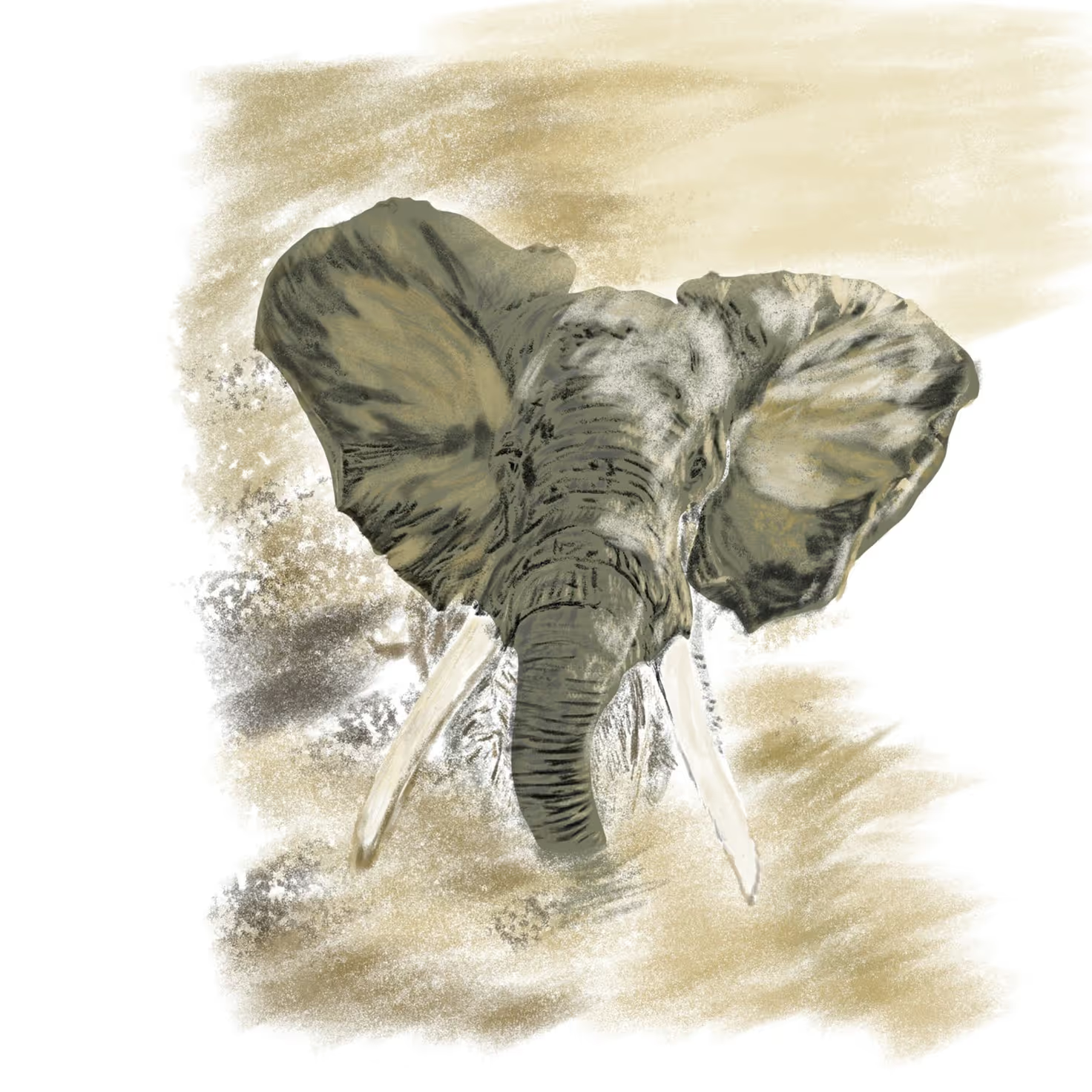
I thought perhaps we could help each other escape our limitations and shortcomings. I don’t have wings, and I envy the galahs and the eagles, even the sparrow sitting on the edge of the gutter. I don’t have gills, and I can’t hold my breath for longer than two minutes. So, I envy the great fish of the ocean and dolphins playing in the waves. I can’t run fast, and my arms are not strong. I am in awe of the elegant speed of a cheetah and the might of an elephant.
Our reality limits our scope, our insight, and our abilities. Yet, instead of admitting our shortcomings, our inabilities, our stupidity, and our guilt, we claim, we boast, and then we judge.
What chance do we stand that we will open our eyes and our minds to the greater horizons of our existence, or perhaps even the domain of God?
So, come fly with me.
But it takes humility and honesty so that we may see.
We can break the shackles of our perception and take the greatest flight of all to freedom.
That is the flight of the mind.

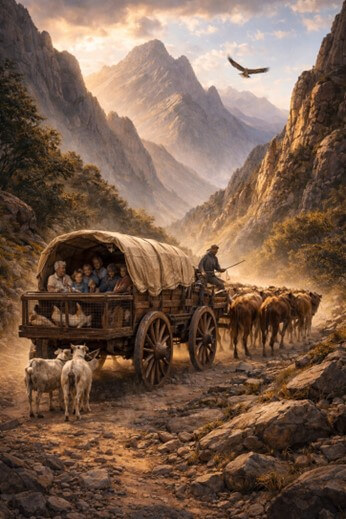
Next time: something different
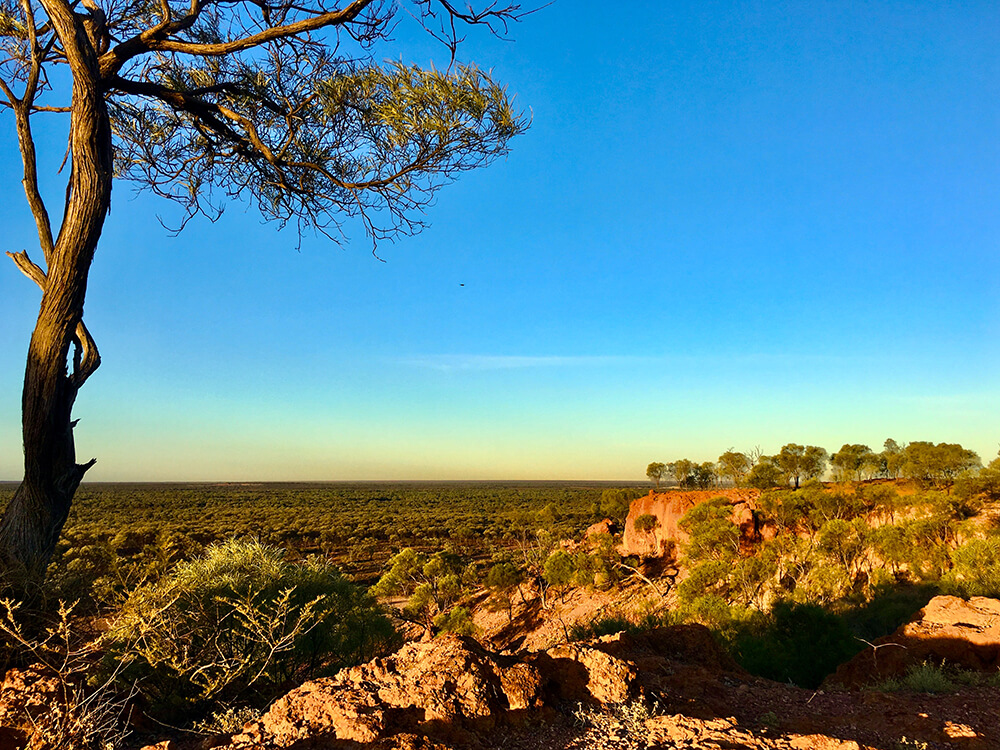
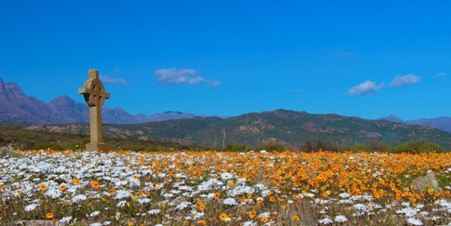
Think Namaqualand
The Song of Tap
an ode to the senses





.png)





Not a subscriber yet?
Click here to subscribe - it's free
Share to a friend
Take a moment to pass along the story to a friend or family. Your recommendation might be exactly what someone in your circle needs to read today. The best stories are those that bring people together.
I'd love to know your thoughts about this story, feel free to leave a comment.
.svg)
.svg)
Lorem ipsum dolor sit amet, consectetur adipiscing elit. Suspendisse varius enim in eros elementum tristique. Duis cursus, mi quis viverra ornare, eros dolor interdum nulla, ut commodo diam libero vitae erat. Aenean faucibus nibh et justo cursus id rutrum lorem imperdiet. Nunc ut sem vitae risus tristique posuere.
