

Cry, My Beloved Country
We were driving the other day through the rolling green hills of the Sunshine Coast Hinterland in Queensland. The first rains after winter had come in, and the country responded with glee. Mountains and valleys draped themselves in green once more, as they have done for thousands of years.
Calves born in winter streaked up the slopes, tails in the air, mocking each other, showing off their new bodies.
As we drove into a valley, we came upon a familiar country scene. It was about 10.30 in the morning — siesta time in the paddock. The cows had gathered in the shade of a massive old tree, and some of the calves had lain down to rest.
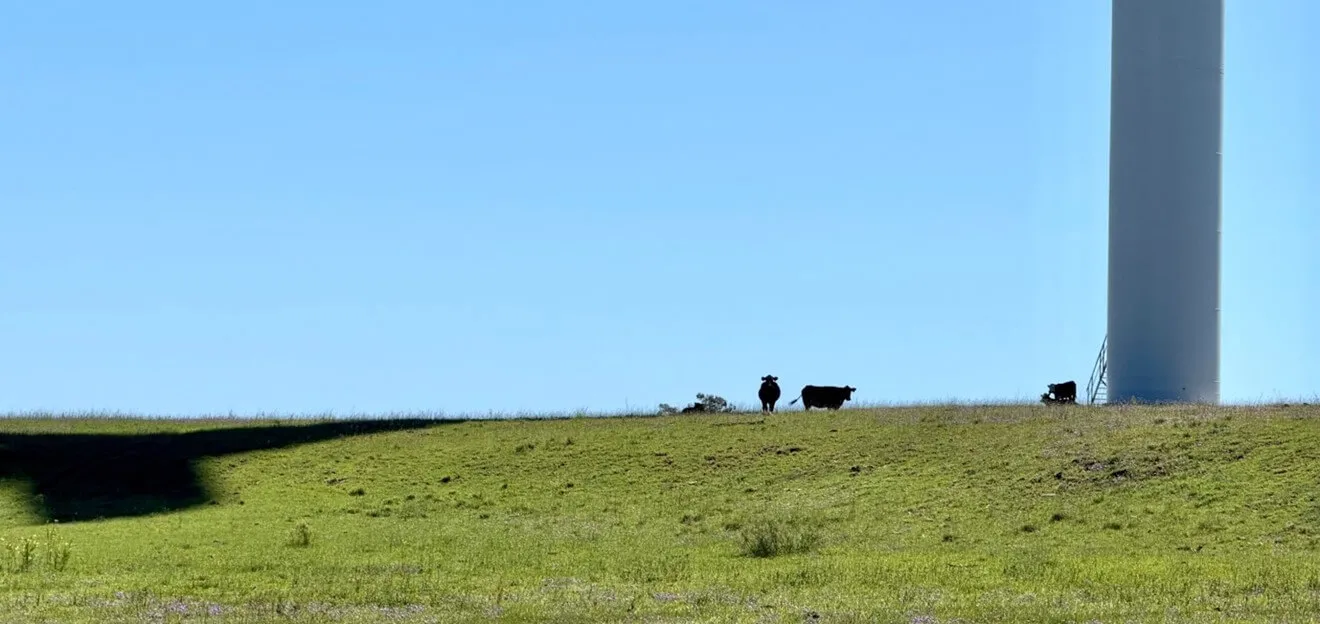
But the tree was strange.
Its bark was smooth, almost artificial, and the trunk formed a perfect cylinder — the diameter of two cows standing end to end. The shade it cast was awkward and geometric, stretching unnaturally down the slope.
I looked up to inspect the leaves.
There were none.
The wind turbine in the paddock stretched nearly ninety storeys high into the clear blue skies, towering over the landscape, alien and out of scale.
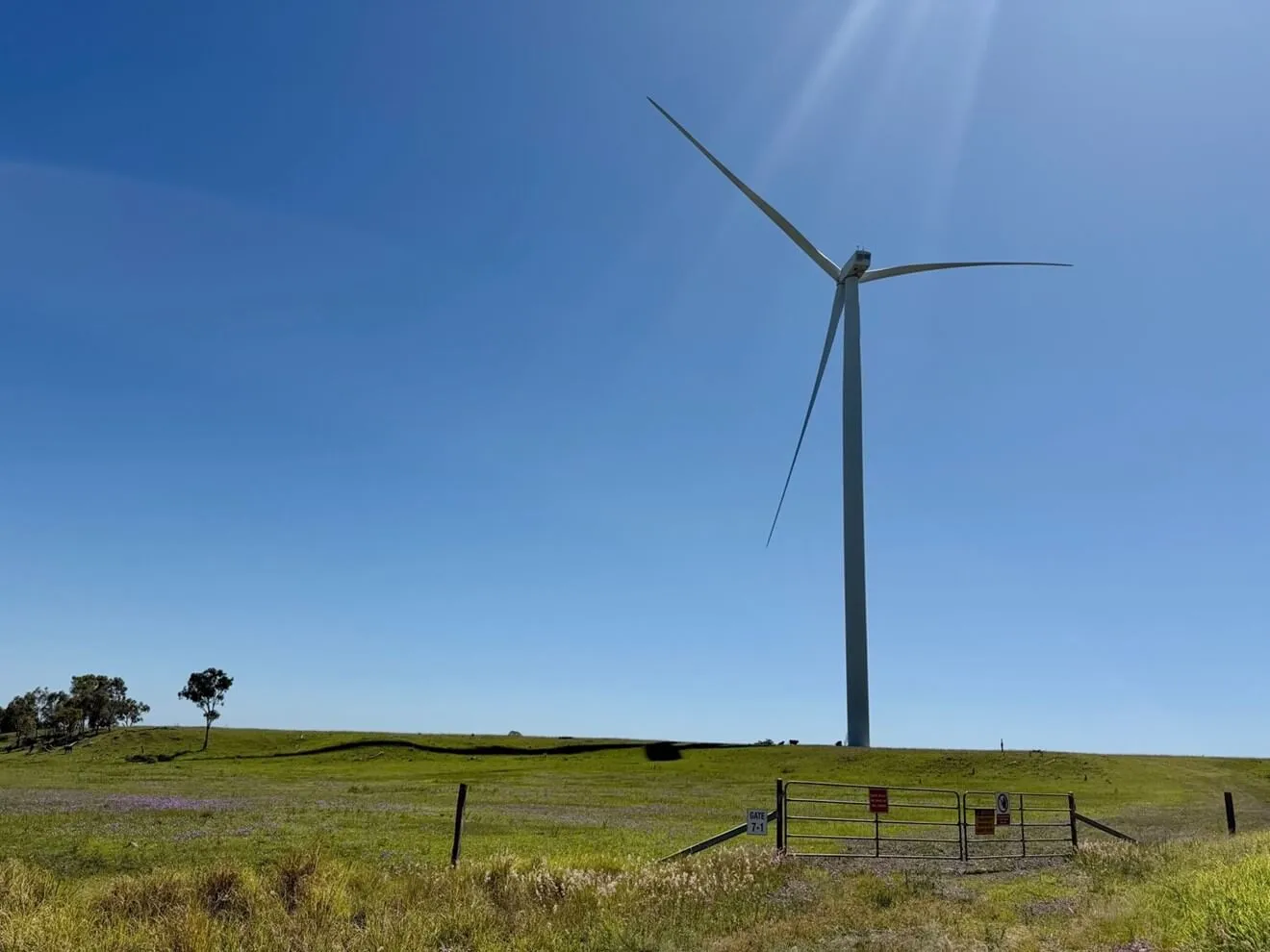
And as we drove on through the country, the true extent of the transfiguration revealed itself.
In my father’s study was a portrait of him, painted as a gift by an admirer. Credo Mutwa was a renowned Zulu sangoma, traditional healer, and author. At the end of Apartheid, he published Let Not My Country Die (with a similar ring to the novel Cry, My Beloved Country by Alan Paton, published around 50 years earlier) — a book filled with grief, warning, and prophecy. Mutwa wrote not as a politician but as a traditionalist. He believed that 1994 marked not the birth of freedom, but the beginning of a deeper tragedy. He warned that abandoning ancestral values and spirituality would lead to the destruction of both people and land.
Thirty years later, his predictions feel uncomfortably close to the truth.
A similar unease settled in my chest in October 2006, when former US Vice-President Al Gore arrived in Australia with his film An Inconvenient Truth. He warned of a pending catastrophe: melting ice caps, rising seas, bleaching reefs, droughts and fires. He declared Australia one of the world’s worst per-capita polluters and urged us to radically change our way of life.
He did not disclose that he stood to profit enormously from Australia’s transition to renewable energy. His company, GIM (Generation Investment Management), currently has many billions in assets.
Some of his predictions were dramatic. Many were wrong.
Nearly 20 years later, the Arctic ice had not vanished, Kilimanjaro still wore snow, and sea levels had not risen by twenty feet.
Our domestic emissions account for around 1% of global output. Even when exports are included, our contribution remains very small. During the Pleistocene, vast herds of ruminants roamed the planet, producing methane on a scale likely comparable to or even larger than today’s livestock — yet ice ages followed. A single plane crossing the Pacific burns tens of thousands of litres of fuel, dwarfing the emissions produced by cattle.
And then there are the people and the land. If you touch down in grandeur on the soil of a foreign land, accusing them of being the villain of the planet, and instructing them to cut off their livelihood as a nation and destroy their countryside with wind turbines, solar panels, massive powerlines and electric substations, you need to stand with its people. You need to demonstrate understanding and empathy and sit down with them to work through the issues.
The problem with grandstanding is that, although we might have a valid argument, we tend to close the window on transparency and shut the door on perspective to better sell our point of view.
And the result?
The then-Prime Minister John Howard acknowledged global warming as a significant issue but declined to meet with Gore during the visit. Howard stated that he did not take policy advice from films. He defended Australia's stance on the Kyoto Protocol, maintaining that it was not the right approach for Australia and would harm the Australian industry. John Howard lost the next election.
The Millennium Drought, which lasted from 1997 to 2009, was at its peak. After Gore’s visit, many voters linked the drought directly to global warming. The media amplified this confluence, portraying Howard as out of touch. Kevin Rudd took over the reins and called it "the great moral challenge of our generation. He ratified the Kyoto protocol on day one in office.
What I like about a more conservative approach to problem-solving, in general, is that it first respects and preserves what we inherited, then carefully considers the facts of a predicament. After all, those who came before us operated within a time slot we need to understand, and although they would have made mistakes, they were not fools.
I am not a climate scientist. But simple logic tells me that with eight billion people, more than a hundred thousand flights per day, over a billion vehicles on the roads and industry blowing clouds of smoke into the air, something in the atmospheric balance must eventually be disturbed. Something has to be done about it.
The question is not whether to act, but how.
As a country child, I would sit for long hours to look at the magic of the wind. When the tree tops stirred with the first air moving in the morning, the windmill picked it up, shrieked, shuddered, and then the sucker rod slowly started moving up and down. Soon, the crystal-clear water would spout into the concrete reservoir, filling it to the brim. No roaring of engines, no switches and no powerlines and always more than enough water for the cattle and the people to drink in the summer heat.
When the first solar panels appeared on the market, I jumped with my cow, Sweetheart, over the moon! We no longer needed to connect to the grid, with powerlines running through the paddocks. On a sunny day, I would have enough power to run the farm enterprise. And when the monsoon comes in and wraps the skies in cloud for days, the generator would kick in, recharge the batteries and switch off again, keeping guard until the sun returns. And the same for lighting in the garden and bore pumps in the paddock. Simple solar panels, a small battery, and a pump.
How good was the simple beauty of natural energy in the country?
But, looking at the images in the link above (photographed before the security officer could remove me), it is clear that the simple genius of independent off-grid country living has spiralled into something that is irreversibly destroying that very country.
Some industry estimates indicate that the Net Zero by 2050 target requires 500 million solar panels on 1,500 solar farms and 31,000 wind turbines, along with up to 44,000 km of transmission lines (28,000 km in Qld alone). This will take up one-third of the state of Qld and 119 million ha across the country, yet will still fail to provide a stable grid for industry.
These staggering figures and images clearly show a country resolute to destroy its pristine natural heritage and farmland in the name of saving the planet.
So, how did this come about? How did we manage to get it so wrong?
The answer is simple.
Somehow, someone decided to harvest the sun and the wind of the countryside to supply all of the ever-growing energy needs of a first-world country’s cities and industries.
Yet, the sure way to break beauty is to exploit it.
To save face internationally, Australia’s politicians would force its farmers and landholders into submission and compliance. If you would try to “Lock the Gate” to Powerlink, as many farmers threatened with their signs on the rural roads in the Sunshine Coast Hinterland, the government’s operator, will simply break the gate down and install the powerline with or without money changing hands.
.jpg)
.webp)
When we became aware that Powerlink was planning a power line that could cross our rural property, I mailed a certified letter to the Project Director. I explained that we held the rare genetics and index herd of the unique Nguni Cattle breed in Australia on the property. We imported embryos from South Africa to address a shortfall in Australia's cattle industry, and are in the process of constructing an eco-friendly, regenerative farming project to demonstrate to clients and industry the natural integration of an original breed, ideal for profitable organic farming in an arid climate. We are building a campsite, an airstrip, and eco-accommodation in the mountains while selecting the stud’s genetic profiles. I explained that the powerlines would destroy the project. I heard nothing and followed up with a second and third letter.
One day, I received a phone call from a lady at the Powerlink office, bubbling with enthusiasm. She explained the fantastic renewable energy project in Queensland and that she is calling to learn more about our situation on the farm and our preferences. What would you do with the information? I asked. Oh, we take the farmers’ views very seriously and will do our utmost best to accommodate your wishes, she said. I explained about the project, and then told her about the three unanswered certified letters received by the Project Director. She became very quiet, and I never heard from her again. When I was finally visited by the Land Access Advisor to be briefed on the details of the line, I was informed that, despite everything, nothing could be changed. The powerline would run over the airstrip, over the campsite and through the centre of the farm over the mountains.
When the government sets out on a path (right or wrong) in full view of its voter support and the international community, it will lose its heart and pursue its targets with fierce determination.
I abolished the airstrip and sold my plane.
The project might have to be scrapped as well.
We need strong, clean energy to power the ever-expanding powerhouse of Australian industry through a stable grid. We need nuclear energy produced in rebuilt existing coal plants, using existing power lines and substations, and using what we have, destroying nothing.
What a mess we are leaving behind for our children and grandchildren to inherit. We received a clean, green country and will leave behind a countryside cocooned and suffocated by a spider web of electric wires, while the behemoths of windmills stand guard over the sad spectacle. A testimony to the lack of insight and poor management by a generation that may yet be remembered for destroying its own.
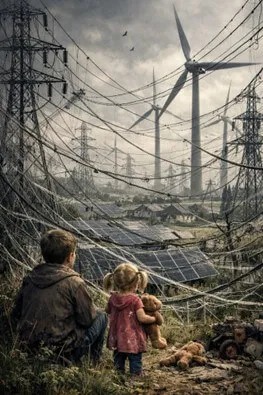
Cry, My Beloved Country
Next Time:
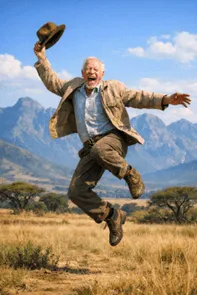
Modi Thabeng (Close to the Mountains)
As we get closer to the far-off mountains veiled in blue, they grow larger and more impressive, and their majesty impacts our minds. And as our perspective changes, so do our value systems.

The Song of Tap
an ode to the senses




.png)








Not a subscriber yet?
Click here to subscribe - it's free
Share to a friend
Take a moment to pass along the story to a friend or family. Your recommendation might be exactly what someone in your circle needs to read today. The best stories are those that bring people together.
I'd love to know your thoughts about this story, feel free to leave a comment.
.svg)
.svg)
Lorem ipsum dolor sit amet, consectetur adipiscing elit. Suspendisse varius enim in eros elementum tristique. Duis cursus, mi quis viverra ornare, eros dolor interdum nulla, ut commodo diam libero vitae erat. Aenean faucibus nibh et justo cursus id rutrum lorem imperdiet. Nunc ut sem vitae risus tristique posuere.
