

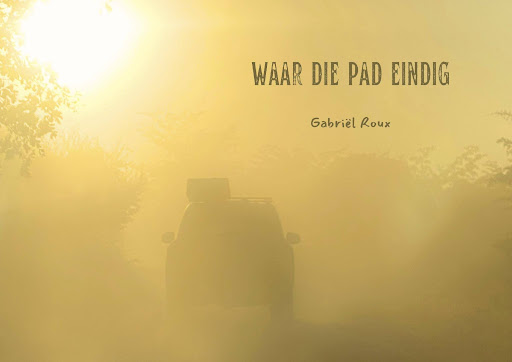
Where the Road Dies
There are but a few things in life as challenging
as arriving at the end of the road.
In the first round, you can be a passenger,
but then, you take control…
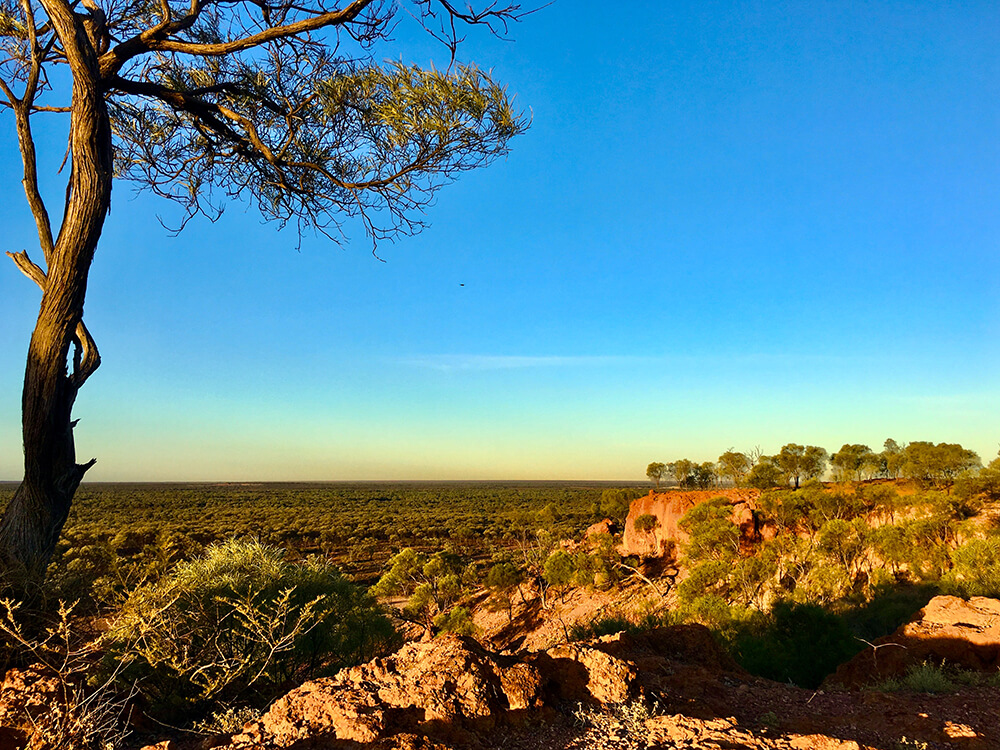
No, I’m not worried about rocks or Erdvark holes, Jack, I said confidently as we slowly crawled through the dense, tall grass. Some as high as the roof of the old Ford F250.
There is a joke in the Makatini about a competition, I continued. The first guy who could throw a rock over the Siyadla River (that narrow stream that feeds the Kosi Lake system) would win a Datsun. After 2 years, the competition was cancelled due to “a lack of interest”. You see, there are no rocks on the vast sandy plains of the Makatini to throw over the Siyadla river! Neither are there any Erdvarks that dig their large burrows in the ground.
My words hovered over the grass seeds, set on fire by the setting sun. The engine purred as the tyres trampled the stems into the sand of the flat, safe surface of the Makatini.
And then we disappeared into the mother of all holes.
The dust cloud rose over the grass plain and slowly settled, snuffing out the last snorts of the Ford’s engine.
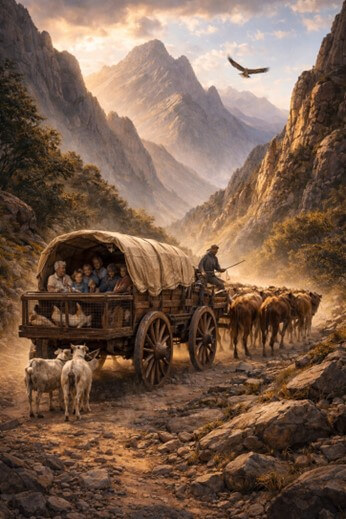
Imagine you are the owner and captain of a sturdy merchant vessel sailing the Mediterranean. It is the year 760 BC.
Your ship was built in the Phoenician port of Sidon from cedar timbers cut in the mountains of Lebanon. The planks are tightly joined and sealed with pitch. She is fifty feet long, carries twenty tons of cargo, and has a crew of five plus twenty passengers and guards. Heavy and stable in rough water, she still rolls slowly over big swells and can scoop water when laden deep — as she is today.
You are setting out on a two-thousand-five-hundred-mile voyage from Joppa, on the eastern edge of the Great Sea, to Tartessos in southern Spain. The hold is filled with Phoenician glassware, wine and olive oil in clay jars, and fine purple-dyed cloth loaded in Tyre. Yesterday you added salt, dried fish and timber. The extra weight has pushed her low in the water, but higher risk means higher return.
And then you set sail. It is late autumn, with winter close behind.
You hug the coast at first, running west along the shores of Anatolia. West of Cyprus, the wind dies. For five days, the sails hang limp while the crew fishes tuna, filleting and salting the catch in high spirits. You watch the waterline creep three inches higher up the hull.
West of Crete, you finally turn away from land, eyes fixed on the western horizon. The days remain gentle, the breeze steady, the sea calm.
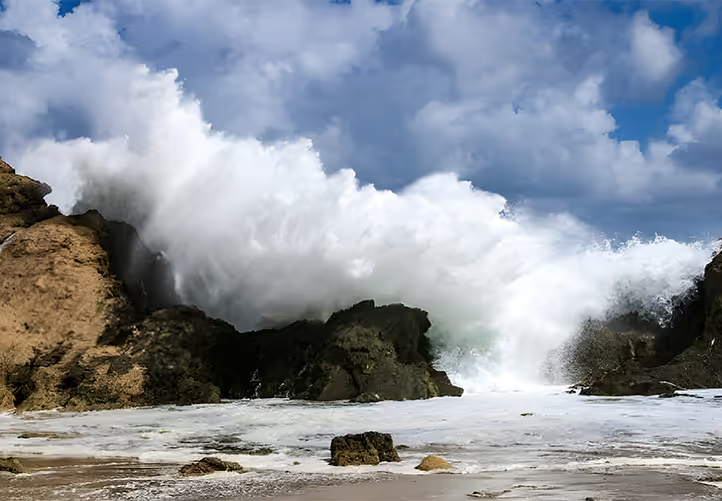
But one night, the wind picks up, luffing the sails. You rush to the quarterdeck just in time to see the lightning flash reflecting on the now restless seas. You grab the steering wheel from the helmsman’s grip and order the crew to strike the sails as the masts start swaying wildly from side to side as she passes the swell. As the sails drop, you lose steerage way, and the ship wallows to the brunt of the storm. And then the screeching of masts and howling of the wind through the rigging start their mocking songs, haunting the crew, as they scramble to secure the cargo while trying to hide their fear. A wave breaks over the bow, and the ship starts scooping water as the heavy bow is tossed in the rising swells. With the help of the passengers, the crew start frantically to bail water out of the ship.
And then they prayed into the storm, each to his own god. The Phoenicians cried out to Baal and Melqart, the Greeks to Poseidon, the Hebrews among them to the Lord God of Israel.
But the storm raged on, the bailing of water fell behind, and the ship began to sink. The crew screamed in fear, and as a last resort, you instruct them to throw the precious cargo overboard in a final attempt to stay afloat and survive.
But the storm picked up only more fury, and the main mast snapped in the wind like a twig between two fingers. The lightning flashed white in their eyes. The rain as furious as the seas. “God is trying to punish someone on board, and we are all going to die with him unless we find out who this is!” someone shouted into the storm. And all looked bewildered at one another. Ten men scrambled below deck and gathered around a table to cast the lot.
The lot fell on a man in his forties. The skin of his face was weathered and covered in part by a dark beard streaked with grey. He was wearing a simple woollen tunic. His tired but sharp eyes sank back into his Jewish complexion.
“Who are you and where are you from? Who are your people, and who do you worship?” they asked.
“My name is Jona”, the man answered in a voice barely audible above the storm. “I am a Hebrew, and I worship the Lord, the God of the heavens who made the sea and the dry land”.
This terrified the men, and they asked, “What have you done to anger your God?”
You look at the solemn face of Jona as he explains: “God sent me with a job to Nineveh in Assyria to the east. I was too scared to go, and I boarded this ship to flee away from God”.
All fell silent. They listened to the storm battling their ship. Water streamed from the deck above into the cabin.
Then one asked: “What must we do to stop the wrath of God?”
Jona looked them in the eye and said simply:
“Pick me up and throw me into the sea, and the storm will seize its fury”.
The men were petrified by the thought. What if they were to kill an innocent man?
So they turn to you, to the captain of the boat.
You look at their torn, wet clothes and bleeding hands from fighting the storm. At the fear in their eyes. You listen to the howling wind and the water gushing down into the hull. The lightning flashed and flashed again. The thunder deafening in its wake. As a wave hit the bow sideways, the ship rolled far over to starboard.
Will she capsize now or under the next wave?
You slowly nod your head.
And on your instruction, the men picked Jona up and tossed him into the fuming seas.
The Ford came to a dead stop as it landed on its nose at the bottom of the hole.
The eight children from 3 families in the back fell over one another, screaming in fear. Jack was draped over the bonnet, and his son, Little Jack, who was sitting between us, was caught between the gears.
“Ben, are you ok?” I shouted through the concertina opening up into the rear of the vehicle. Ben was about 11 years old and the strongest of the children.
“Yes, I’m fine!” came the answer above all the crying and shouting.
“Pull yourself up the seats until you reach the back doors of the van”, I instructed.
“Push both doors upwards to open them and help all the children through the opening”
Ben managed to open the doors as the last of the dust settled. He then retrieved the children, one by one, through the hatch, like little kittens out of a shoebox.
Besides a couple of minor bruises, no one was injured.
Finally, Jack, Little Jack and I crawled through the concertina, pulled ourselves up the benches, and finally through the hatch and onto solid ground. The hatch is conveniently placed at ground level! We all walked round and round the spectacle in the ground. The Ford was doing a balancing act on its nose, leaning lightly against the one wall of a hole the size of a small house. The remnants of the palm fronds, sticks and grass that covered the Hippo trap were hanging in threads.
The sun was bailing out in the West, and the Hippos would soon come out of the lake to graze. Even worse, the mosquitoes have already started swarming out of the swamps.
“Jack, will you be ok to look after the children?” I asked.
The Hippo’s will not be a danger as long as you light a fire and stay together.
If I start running now, I could be back home around midnight and be back here in the small hours to pick you all up.
But instead of Jack answering, Little Jack plucked my pants and suggested: “Why don’t you use the 4L gear, Sir?”
Little Jack was about 5 years old, and all the way here enquired about the peculiar-looking short arm of the Four Wheel Drive lever. I explained that 4L was for difficult terrain and low speeds. He wanted a demonstration up a dune, but “there was no need”, I explained, “…we are not in trouble”.
“That is a good idea, Little Jack”, I commended, but 4L required the wheels to touch the ground. Unfortunately, they are not. The Ford is standing on its nose”
“But you said 4L is for when you are in trouble, and you are in trouble now! You said so yourself!” he protested.
“Yes, Little Jack, you are right, we are in trouble. But there is trouble, and there is double trouble. This is double trouble. To tell you the truth, I have no idea how we are going to get the Ford out of the hole again. We might have to get many men with spades to dig for many days, to change the slope”.
But little Jack was not impressed.
We took a few more laps around the hole, considering our options, when I finally said to Jack, “I’d better start running now. It will be dark soon, but I will be able to follow the sand tracks in the startlight. The moon should be up around 9, which will provide a bit more light for you guys as well.
This is when Little Jack plucked my pants again and said: “Don’t you have any faith, Sir?”
It was quiet for a long while.
And then my answer went to Big Jack: “I’d better demonstrate 4L to Little Jack so that he can understand the limitations. I think the fuel would have drained out of the carburettor, and I won’t be able to start the car. But in case it does, please stand on the far side of the hole and well clear, because she might kick up some sand.
I then climbed through the hatch, sailed down the benches, crawled through the concertina connection with the cab and draped myself over the steering wheel.
The smell of petrol from the drained carburettor was suffocating.
I took the handbrake off, engaged 4-wheel drive and diff lock, placed the gearstick in reverse and pushed the clutch to the floor. If the engine takes, I will have only a few seconds to run on the fumes in the carburettor before she dies.
When I turned the key, the engine immediately started. I pushed the fuel to the floor and sent the revs straight through the red bar.
I then jerked my foot off the clutch to fully engage the gearbox in a single move.
The black and white Ford F250 truck rocketed straight into the air in a huge burst of sand and dust. She cleared the wall of the hole and landed back on the ground on her hind wheels. After a few bounces, she settled down, ready for the passengers to resume their seats.
On our way home, climbing over the white dunes in the moonlight, Little Jack was unusually quiet. Finally, I broke the silence, “What do you think of 4L?” I asked.
“Sir, you taught me that 4L is very powerful and is meant for when you are in trouble. But when we were in trouble, you did not believe your own words.”
For, as the road dies under our feet, a new path arises.
The Song of Tap
an ode to the senses



.png)





Not a subscriber yet?
Click here to subscribe - it's free
Share to a friend
Take a moment to pass along the story to a friend or family. Your recommendation might be exactly what someone in your circle needs to read today. The best stories are those that bring people together.
I'd love to know your thoughts about this story, feel free to leave a comment.
.svg)
.svg)
Lorem ipsum dolor sit amet, consectetur adipiscing elit. Suspendisse varius enim in eros elementum tristique. Duis cursus, mi quis viverra ornare, eros dolor interdum nulla, ut commodo diam libero vitae erat. Aenean faucibus nibh et justo cursus id rutrum lorem imperdiet. Nunc ut sem vitae risus tristique posuere.
